2000s computer games occupy a strange place in my backlog. They are old enough to carry serious nostalgia, but modern enough that many still run, look recognizable, and feel familiar within minutes. That makes them tempting for a busy adult with a couple of free evenings. It also makes them easy to overrate. Important does not always mean replayable, and a beloved title can be better as a memory than a recommendation.
My test is simple: would I suggest this game to someone in 2026 who has six hours this weekend, a current Windows PC, and limited patience for setup friction? That question separates genuine classics from museum pieces. Some 2000s computer games remain wonderfully direct. Others need patches, mods, a guide, or a generous mood before they become enjoyable.
Why the decade still feels different
The early 2000s sat between two gaming eras. Developers had enough processing power for large 3D worlds, voiced characters, physics systems, and detailed environments, but they were still designing around small hard drives, boxed releases, and players who might not have an always-on connection. That combination produced games with strong identities and surprisingly little filler.
A campaign often asked for 10 to 20 focused hours rather than an endless seasonal commitment. Menus were usually plain. Progression was easier to understand. A game might have one excellent idea and build the entire experience around it instead of adding crafting, battle passes, daily challenges, and five currencies.
That focus is a major reason 2000s computer games can feel refreshing now. After work, dinner, and family responsibilities, I do not always want a second job disguised as entertainment. A tight shooter, a compact adventure, or a turn-based strategy game can deliver more satisfaction than a massive open world that needs 40 hours before its best systems appear.
The tradeoff is rougher design. Checkpoints can be badly spaced, tutorials can be nonexistent, and widescreen support may require community fixes. You should approach the decade with curiosity, not blind loyalty.
The genres that aged best
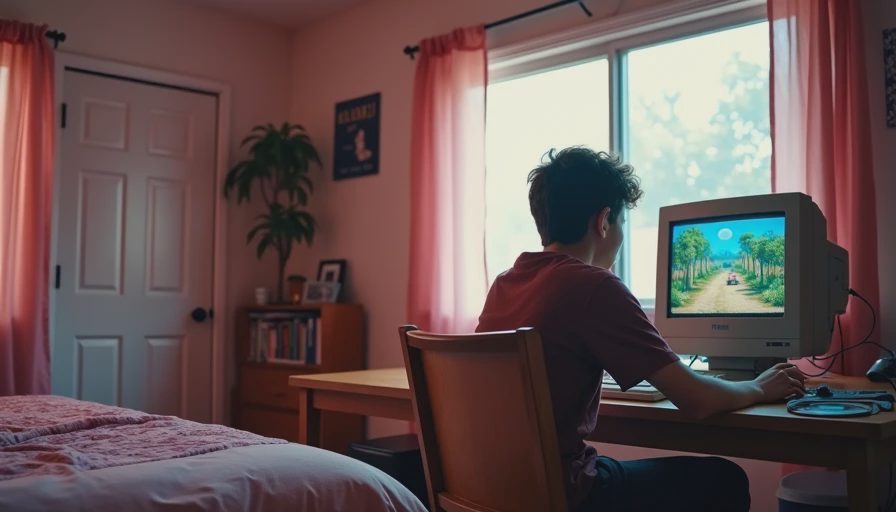
PC shooters are the safest starting point. Half-Life 2 remains easy to recommend because its physics puzzles, readable weapons, and carefully staged encounters still communicate clearly. The original F.E.A.R. also deserves attention: its gunplay has weight, its enemy behavior creates pressure, and its horror atmosphere works without relying on constant jump scares. A modern player may notice repetitive office corridors, but the core action remains sharp.
Strategy has aged well for a different reason. Civilization IV, RollerCoaster Tycoon 3, and Command & Conquer: Generals still understand that the pleasure comes from making meaningful decisions, not watching endless animations. Their interfaces can look dated, but the underlying loops are strong. If you have only a short window, a turn-based game is especially forgiving because you can stop after one decision instead of losing the thread of a real-time campaign.
Role-playing games are more complicated. The Elder Scrolls IV: Oblivion offers a huge sense of place, memorable quests, and plenty of freedom, yet its character faces, level scaling, and combat can be difficult to ignore. Dragon Age: Origins holds up better as a party-based role-playing game because its dialogue choices and companion relationships still create momentum. The honest recommendation is to accept old interfaces and focus on the writing, atmosphere, and tactical choices.
What feels dated fastest
Camera behavior is one of the biggest barriers. Older third-person games often use fixed angles or a camera that fights narrow hallways, staircases, and doorways. Prince of Persia: The Sands of Time remains elegant because movement and animation were so carefully designed, while many lesser platform adventures now feel like they are asking you to wrestle the controls.
Save systems are another issue. Some 2000s computer games use manual saves, limited save points, or checkpoints that were designed around a player sitting down for a long uninterrupted session. That design clashes with modern life. If you are stopping because a child needs help with homework, losing 25 minutes can turn a promising revisit into a permanent uninstall.
Early online features are often the least reliable part. Multiplayer communities have moved, servers have closed, and old matchmaking systems may depend on unofficial tools. A game can still be worth playing for its single-player campaign, but do not buy it solely for an online mode without checking its current support and player activity.
Visual age is easier to forgive than mechanical friction. I can accept low-resolution textures in a great world. I have less patience for inventory screens that require six clicks to equip a basic item or missions that hide the next objective behind a vague conversation line.

A practical way to revisit them
Start with the version that removes the most friction, not necessarily the version you owned. Digital storefront releases sometimes include patches, improved resolution, or controller support. A remaster can be a smart choice when it preserves the original pacing while fixing obvious display problems. It can also be the wrong choice if visual changes flatten the atmosphere or alter the controls you remember.
Before launching, spend 10 minutes checking three things: resolution support, save locations, and controller or mouse sensitivity. For older PC releases, community patches from established fan projects can solve crashes and widescreen issues, but download tools from reputable sources and keep installation instructions nearby. Do not turn a two-hour gaming session into an entire evening of troubleshooting unless the game has a strong reason to earn that effort.
Mods should improve comfort rather than replace the game. A texture pack, field-of-view adjustment, subtitle fix, or widescreen patch can help. A giant overhaul can bury the original design under new systems. Play the unmodified version first when possible, then add changes only when a specific problem interrupts your enjoyment.
For 2000s computer games that use keyboard and mouse controls, begin with a sensitivity setting lower than your modern shooter default. Older aiming systems can feel twitchy, especially at high frame rates. For strategy titles, save at the start of each major campaign section and keep one backup file. These small habits prevent technical age from becoming unnecessary frustration.
The best choices for limited free time
If you want action, choose Half-Life 2, F.E.A.R., or Max Payne 2. Each has a clear identity and a campaign that moves forward without demanding a hundred side activities. If you want strategy, Civilization IV is better for a long weekend, while RollerCoaster Tycoon 3 works in shorter sessions. For role-playing, Dragon Age: Origins rewards a longer commitment, and Star Wars: Knights of the Old Republic remains approachable if you can tolerate older combat pacing.
Some 2000s computer games are better approached as targeted experiments. Play the opening two hours of an adventure game instead of promising yourself the entire series. Try one campaign in a strategy title before installing expansions. Give an old simulator one evening to explain its systems. This approach protects your limited time and produces a more honest judgment than forcing yourself through nostalgia.
I also recommend avoiding the famous title you only remember from magazines or friends unless its actual design interests you. Reputation can create pressure to enjoy something. You do not owe a classic your weekend because it influenced later games. A modest title with clean controls may be more rewarding than a landmark that now feels exhausting.
The honest verdict
The best 2000s computer games are not valuable merely because they are old. They remain worth loading because their strongest ideas are still easy to feel: a weapon that has satisfying impact, a choice that changes a relationship, a map that rewards attention, or a strategy system that turns a quiet evening into one more turn.
The weaker ones often reveal their age through friction rather than graphics. They bury objectives, interrupt movement, punish short sessions, or depend on online infrastructure that no longer exists. That does not erase their historical importance, but it changes the recommendation.
If you are choosing tonight, start with the shortest path to fun: a well-supported shooter, a focused adventure, or a strategy game with dependable saves. Set a two-hour test window, fix only the problems that genuinely bother you, and stop without guilt if the memories do not survive contact with the controls. The right 2000s computer games can still meet a modern adult halfway. The rest can remain good memories.


No signals yet — transmit the first.