There is a particular pleasure in starting 80s video games after the house gets quiet. The sounds are sharp, the screens are simple, and a game that once demanded an entire Saturday can now fit into a 30-minute session. But memory is generous. Some classics still feel clever and immediate, while others are better as a memory than a recommendation. If you have limited free time, the question is not whether a game was important. It is whether it is still enjoyable to play now.
My honest view is that the best 80s video games are built around clear rules, fast feedback, and short attempts. They do not need modern graphics to work. Games with awkward passwords, punishing restart points, or controls designed for an arcade quarter can be harder to recommend in 2026. That does not make them worthless. It simply means you should choose the right version and arrive with realistic expectations.
What makes an old game worth revisiting?
The strongest 80s video games communicate almost everything without a tutorial. You see a gap, an enemy, or a moving platform, and the game tells you what to do through timing and consequence. Super Mario Bros. remains the obvious example. Its movement has weight, its levels introduce ideas cleanly, and a short session still feels complete. You can play for ten minutes or lose an evening without needing a long setup.
The same principle helps explain why Tetris, The Legend of Zelda, Metroid, and Mega Man 2 remain easy to recommend. Each has a strong central action that feels understandable within minutes. The details deepen over time, but the basic loop never becomes confusing. A busy adult can return after three weeks away and know exactly what matters.
By contrast, a game can be historically significant without being pleasant today. Early adventure games often rely on obscure commands, while some arcade conversions feel designed to consume quarters rather than reward learning. Important does not always mean replayable. I would rather spend an hour with a clean version of Contra than force myself through a famous title whose friction overwhelms its ideas.
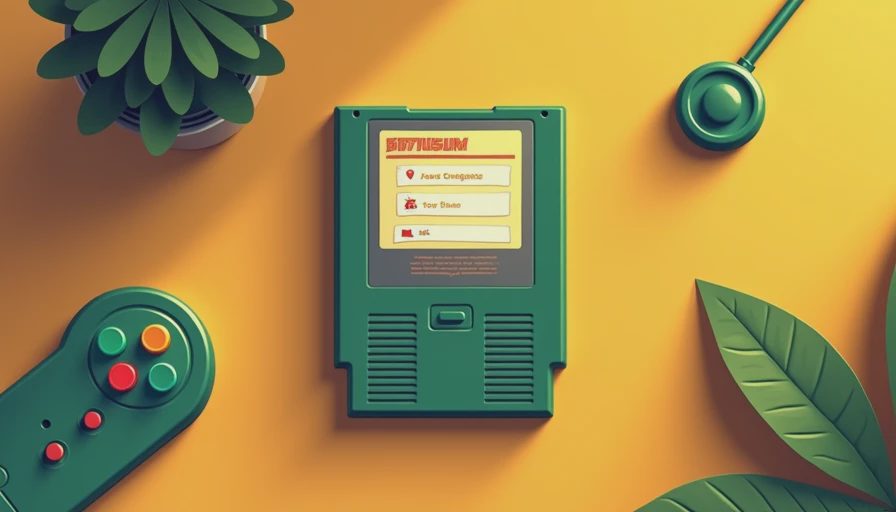
The 80s video games that still feel excellent
For a practical starting point, begin with games that respect short sessions. Super Mario Bros. 3 is still remarkably readable, with strong level variety and enough secrets to reward curiosity without burying the main path. Contra remains direct and exciting, especially with a second player, although its difficulty is less forgiving than most modern action games. You can improve through repetition, but expect failure to be part of the design.
Arcade-style games also age well when their rules are clean. Galaga, Defender, Ms. Pac-Man, and Donkey Kong are easy to understand and satisfying in small doses. They are ideal for a handheld or a quick emulator session because each attempt has a natural ending. You do not need to remember a plot, manage a skill tree, or find your place in a sprawling map.
For slower play, The Legend of Zelda still offers a strong sense of discovery. Its world can be cryptic, and some secrets are difficult to find without a guide, but the feeling of making progress remains special. I recommend using a light walkthrough only when you are stuck for more than 15 minutes. Looking up one hint is better than abandoning a good adventure because an invisible wall hid the next step.
Games that need the right expectations
Not all 80s video games are smooth recommendations, even when they are famous. Metroid has atmosphere and a wonderful sense of isolation, but its map can be demanding if you are used to modern navigation. Castlevania is still compelling, yet its fixed jumps and enemy patterns require patience. These games are worth loading when you want a focused challenge, not when you want a relaxed evening after work.
Role-playing games from the decade require an even bigger adjustment. Dragon Quest and Final Fantasy established ideas that later games expanded, but their pacing can feel slow, especially during random battles. Saving is often limited, menus are less convenient, and the story may take a while to become interesting. They are rewarding if you enjoy seeing genre foundations, but they are not automatically the best use of a busy weekend.
This is where version choice matters. A modern collection with save states, adjustable display options, and a rewind feature can remove needless frustration without changing the core game. I do not consider that cheating. If the original version made you repeat 20 minutes because of one mistake, a save state simply lets you spend your time on the parts you actually wanted to play.

The best ways to play today
The easiest route into 80s video games is usually an official collection or a current console service. Nintendo, Sega, Capcom, Konami, and Atari have all released collections or reissues that make older libraries more accessible. Availability changes, so I focus less on owning a perfect physical copy and more on getting a reliable version with responsive controls.
A standard gamepad works well for most console titles, but the controller can change the experience. The Nintendo Switch Pro Controller, Xbox Wireless Controller, and 8BitDo pads are comfortable choices for longer sessions. For arcade games, a fight stick or a compact USB arcade controller can make Pac-Man, Street Fighter, and shoot-em-ups feel more natural. You do not need an expensive setup; a responsive D-pad matters more than premium materials.
Emulation can also be practical when you own the games and use lawful software and files. The advantage is flexibility: save states, screen filters, button mapping, and quick access to multiple titles. The disadvantage is setup time. If you spend an hour adjusting scanlines and shader settings before playing, the technology has become the hobby. Start with the default settings and change only what makes the game easier to see or control.
A realistic weekend plan
If you have six hours this weekend, do not install 30 games and call that a plan. Pick one short arcade game, one platformer, and one adventure or role-playing game. Spend 45 minutes with each before deciding whether the control, pace, and difficulty fit your current mood. A game that seemed boring in 1989 might now be perfect for short sessions, while a favorite may reveal too much repetition once the nostalgia wears off.
For a first evening, I would choose Super Mario Bros. 3, Tetris, and The Legend of Zelda. The first gives you precise movement, the second works in five-minute bursts, and the third provides a longer-term project. If you want more intensity, swap in Contra or Mega Man 2. If you want something calmer, try SimCity, assuming you are comfortable with its older interface and slower pace.
Keep notes on what actually bothers you. Is it the controls, the lack of saving, the visual noise, or simply the need to repeat early levels? That answer is more useful than calling a game good or bad. Sometimes a small adjustment, such as using a save state or a modern port, turns an exhausting session into a satisfying one.
The honest verdict on 80s video games
The best 80s video games are not valuable only because they are old. They remain fun because their ideas are focused, their rules are visible, and their playtime can fit around a real adult schedule. Super Mario Bros. 3, Tetris, The Legend of Zelda, Contra, and Mega Man 2 still deserve attention, although each asks for a different level of patience.
Other 80s video games belong in a historical tour rather than a full replay. That is not an insult. Sometimes two hours with a documentary, a retrospective, or a short gameplay video is enough to understand why a title mattered. You do not owe every classic a complete playthrough.
Start with one game, use the most convenient legitimate version, and give it a focused hour. If the movement feels good and failure teaches you something, keep going. If you are only enduring it because someone called it essential, move on. The decade produced plenty of brilliant design, and there is no prize for wasting your limited free time on a game that no longer meets you halfway.



No signals yet — transmit the first.