There is a particular pleasure in returning to early 2000s computer games after work, when the house is quiet and you have one evening available instead of an entire summer. The pleasure is real, but so is the friction. Old launchers fail, widescreen resolutions look strange, and some games remembered as masterpieces become chores after twenty minutes. I am less interested in declaring everything a classic than answering a simpler question: would I recommend this to a busy adult in 2026?
Why these games can feel better and worse than memory
The best early 2000s computer games were built around strong ideas rather than endless content. A campaign could last eight to fifteen hours, a strategy game could make one map feel meaningful, and a multiplayer shooter could give you a memorable evening without a battle pass. That compactness fits modern life surprisingly well. I can play for forty minutes after helping with homework and still feel that I accomplished something.
The problem is that memory edits out inconvenience. We remember the atmosphere of Morrowind, the tension of System Shock 2, or the speed of Unreal Tournament 2004, but not always the awkward inventory screens, manual patches, confusing quests, or unstable multiplayer services. Important does not always mean replayable. A game can deserve its historical reputation while being better as a memory than a recommendation.
When I revisit one, I judge three things first: how quickly it becomes enjoyable, how much old design friction I must tolerate, and whether its central mechanic still feels distinctive. If the answer is strong on all three, it earns time on my current hard drive.
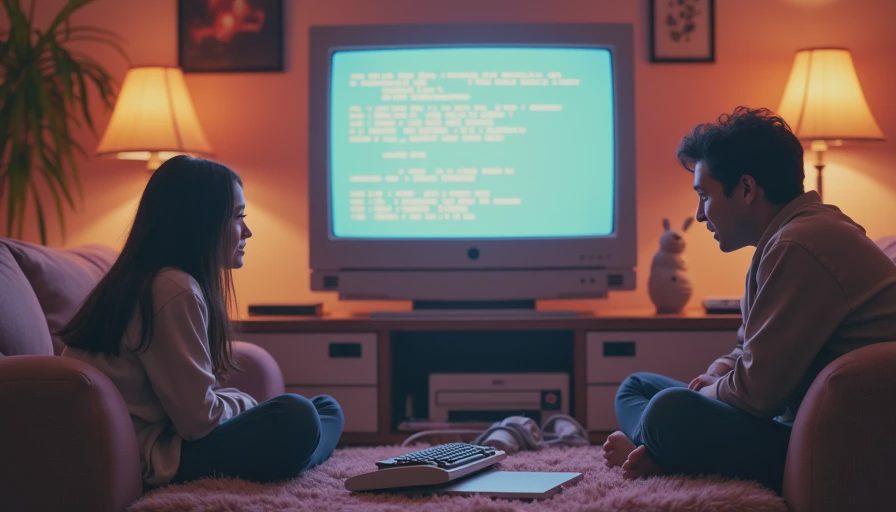
The strongest early 2000s computer games for a short modern backlog
Half-Life 2 remains one of the safest recommendations. Its opening hour still establishes mood, movement, and world-building with unusual confidence, while the gravity gun gives familiar physics puzzles a tactile identity. The facial animation shows its age, but the pacing is generous by modern standards. You can finish a chapter in a single sitting and stop at a sensible point.
Star Wars: Knights of the Old Republic is another strong choice if you can accept turn-based combat hidden beneath a real-time presentation. Its party conversations and moral choices carry the experience, not fast action. The interface can be clumsy, and the original PC version benefits from community fixes, but the writing still gives the adventure momentum. It is an excellent late-night game because dialogue and exploration remain more important than twitch reflexes.
For a shorter, stranger experience, try Psychonauts. Its visual style has aged better than some of its platforming, and the mental-world settings still feel inventive. The final stretch is famously less forgiving than the rest, so patience matters. I would not promise flawless design, but I would recommend it to anyone who values imagination over polish.
What needs patience before you start
Many early 2000s computer games assume that the player will read a manual, search a forum, or accept a few broken edges. Deus Ex rewards curiosity but does not always explain its systems clearly. Thief: Deadly Shadows delivers excellent stealth spaces, yet its movement and combat can feel stiff until you stop treating it like a modern action game. The original Max Payne still has superb gunplay, but its repeated warehouse fights are less exciting when you are no longer sixteen and playing through the night.
Technical setup is part of the decision. Steam versions are usually the easiest starting point, although community patches can still improve widescreen support, texture scaling, controller mapping, and crashes. GOG often provides older games with useful compatibility adjustments, but its included fixes are not identical across every title. Before buying, check whether the game supports your preferred resolution and whether saving works reliably through the current release.
I also recommend keeping expectations modest around online play. Dedicated servers disappear, matchmaking breaks, and old account systems can become more trouble than the game is worth. A single-player campaign or local skirmish mode is usually the safer use of limited free time.
Early 2000s computer games by the kind of evening you have
If you have one focused hour, choose a mission-based game such as Hitman 2: Silent Assassin, Splinter Cell, or Serious Sam. These games give you clear objectives and a satisfying stopping point. Splinter Cell is slower and more deliberate than current stealth games, but the shadow mechanics still create useful tension. Hitman offers more freedom, though its controls and disguises require patience.
If you have a free Saturday, strategy games become more appealing. Age of Mythology is approachable because its campaigns provide structure, while Civilization III remains absorbing if you enjoy long-term planning and do not mind an older interface. The appeal is not convenience; it is the way a simple decision can reshape an entire session. Just avoid starting a grand campaign when you know you have errands in two hours.
For an easy comfort play, The Sims 2 still works better than many people expect. Its personality systems and household stories create small, funny accidents without demanding constant attention. RollerCoaster Tycoon 2 is even easier to recommend: readable goals, compact scenarios, and enough creative control to make a twenty-minute session feel complete.
A practical way to choose your first revisit
Start with the game you remember for a specific reason, not merely the one with the highest reputation. If you remember exploring strange spaces, choose Morrowind or System Shock 2. If you remember mastering movement, choose Unreal Tournament 2004 or Quake 4. If what you miss is a story, choose Knights of the Old Republic or Max Payne. A precise memory gives the replay a better chance.
Next, decide how much setup you will tolerate. A ten-minute resolution fix is reasonable. Installing five unofficial programs, editing configuration files, and troubleshooting audio for an hour is a different hobby. There is nothing wrong with that hobby, but it should be an intentional choice rather than an unexpected tax before dinner.
Finally, give the game a fair trial of about ninety minutes. That is long enough to pass the opening tutorial, understand the main loop, and notice whether the controls are becoming natural. If you are still fighting the interface instead of thinking about the game, move on. Your time is the scarce resource, not your nostalgia.
The honest recommendation
The most rewarding early 2000s computer games are not necessarily the most famous ones. They are the games whose core ideas remain clear after the graphics soften and the interfaces age. Half-Life 2, Psychonauts, Knights of the Old Republic, The Sims 2, and RollerCoaster Tycoon 2 still offer strong reasons to return, while others need a specific mood or a willingness to repair old technology.
I would begin with one manageable campaign, install the simplest current version, and avoid turning the search for a perfect setup into the main event. These games do not need to win an argument against modern releases. They only need to give you a good evening. Some will fail that test, and that is useful information too. The goal is not to preserve every childhood favorite. It is to find the few that are still worth loading.

No signals yet — transmit the first.