The best 2000s pc games occupy an awkward place in my backlog. I remember them as huge, clever, and endlessly playable, but I also remember installing patches from magazine discs and fighting with settings menus before getting to the actual game. Returning now means separating the warmth of memory from the reality of playing after a long workday. Some remain astonishingly good. Others are better as a memory than a recommendation.
For this list, I am judging games as a busy adult in 2026, not as a collector or a museum guide. The question is simple: if you have six hours this weekend, will this game reward the time, or will setup friction and dated design drain your enthusiasm?
What made 2000s PC games special
The decade was a remarkable transition period. Developers were moving from fixed-resolution CRT monitors toward widescreen displays, from boxed releases toward digital storefronts, and from local multiplayer toward broadband connections. That instability produced some rough edges, but it also created an unusually inventive PC library.
Games such as Half-Life 2, Deus Ex: Human Revolution's predecessor Deus Ex, The Sims 2, World of Warcraft, Civilization IV, and BioShock each offered a different kind of time sink. They were not all polished in the modern sense, yet they trusted players with systems, experimentation, and failure. Many did not explain every mechanic immediately, which can feel refreshing when so many current games turn their opening hour into a guided tour.
The strongest 2000s pc games also had clear identities. Portal is compact and precise. Left 4 Dead is built around repeatable cooperation. The Orange Box remains a nearly absurd value proposition. Even when the technology shows its age, the design idea usually arrives quickly, making it easier to fit a session around family, errands, and work.
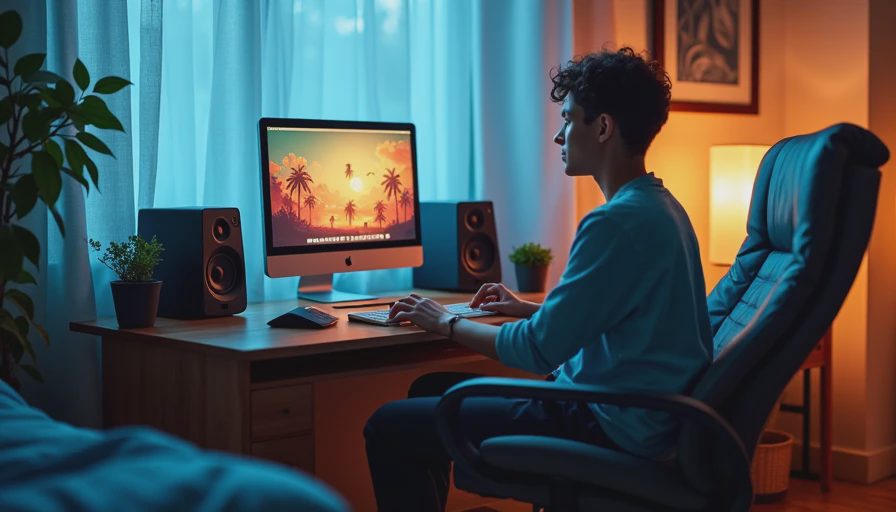
The games that still feel excellent
Half-Life 2 remains the safest starting point. Its vehicle sections are less graceful than memory suggests, and some facial animation now looks unmistakably old, but the pacing still works. The game constantly changes its physical problem, visual setting, or combat rhythm before fatigue sets in. A modern player can finish it in roughly a focused weekend and understand why it mattered without treating it like homework.
Portal is even easier to recommend. It is short, funny, mechanically clean, and respectful of your time. Portal 2 adds more story and variety, but the original has a sharpness that makes it ideal for an evening replay. This is one reason 2000s pc games remain valuable: not every classic demands a sixty-hour commitment.
The original BioShock still has an excellent atmosphere and memorable audio design. Its shooting feels loose compared with newer immersive shooters, and the upgrade system is not especially balanced. Still, the underwater setting, environmental storytelling, and escalating moral questions give it enough personality to overcome those limitations.
The games that need patience
The first Deus Ex is foundational, but it is not effortless. Combat feels clumsy, inventory management is awkward, and the opening hours can overwhelm someone expecting a modern action RPG. Give it time, though, and its flexible objectives become more interesting than many newer games. You can sneak, hack, talk, shoot, or improvise your way through situations that look more linear at first glance.
The same warning applies to Morrowind. Its world-building and sense of discovery are extraordinary, but the combat is uncomfortable, the journal can become a second job, and the early movement speed tests patience. It is worth loading if you enjoy reading, mapping, and solving problems without constant direction. It is not the right choice for a tired player wanting immediate momentum.
Some 2000s pc games are historically important without being ideal recommendations. Spore, for example, still has an inviting creative premise, but its later stages feel thinner than the childhood memory of designing creatures suggests. The original Far Cry has impressive outdoor combat, yet its difficulty spikes and stealth behavior can feel arbitrary. These are interesting revisits, not automatic purchases.

Multiplayer and strategy hold up differently
Multiplayer games age according to whether their core loop remains enjoyable without a crowded original community. Left 4 Dead 2 is still an easy recommendation because its campaign structure, director system, and four-player teamwork create a reliable evening activity. Finding the right group matters more than playing on the exact hardware I used years ago.
Team Fortress 2 still has excellent class design, but the surrounding experience is more complicated than it was at launch. Civilization IV remains deeply satisfying for strategy fans, especially with the Beyond the Sword expansion, though its interface and turn pacing require patience. The Sims 2 offers stronger simulation detail than many players remember, but installing and organizing a complete setup can take longer than the first play session.
World of Warcraft is a special case. Its early design is historically fascinating, but the live game has changed so extensively that returning for the original feeling requires a version choice and a willingness to accept MMO repetition. It can still absorb a month, but it is a poor pick if you want a contained weekend experience.
Making old PC games easier to revisit
Start with the simplest legal version available through a current store such as Steam or GOG. Those releases often include community fixes, updated installers, or compatibility work that saves time. Do not immediately download five graphics packs. First confirm that the base game launches, saves correctly, and feels good at your monitor's native resolution.
A controller can improve games designed around analog movement, while a mouse remains essential for shooters and strategy titles. For older games, a modest frame-rate limit can feel better than pushing hundreds of frames through an engine never designed for it. Widescreen patches are useful, but they sometimes stretch menus or break cutscenes, so treat them as optional improvements rather than requirements.
Keep a save backup before adding unofficial fixes. Read installation notes, use one change at a time, and avoid random executable files from unidentified sources. Ten minutes of careful setup is reasonable. Spending an entire Saturday debugging a game you only half remember is not nostalgia; it is unpaid technical support.
My practical shortlist for limited free time
If you have two hours, choose Portal, Peggle, or a few rounds of Left 4 Dead 2. If you have one quiet weekend, Half-Life 2, BioShock, or The Orange Box gives you a complete experience without demanding a lifestyle change. If you want a long project, Civilization IV, Morrowind, The Sims 2, and Deus Ex can support dozens of hours, provided their older interfaces do not bother you.
That is the useful distinction among 2000s pc games. A classic does not need to feel modern in every detail, but it should make its best qualities easy to reach. Portal gets there in minutes. Morrowind asks for commitment before it opens up. Both can be worth loading, but they serve different evenings.
My strongest recommendation is to begin with a short, mechanically confident game rather than the title you remember as the greatest of all time. Success creates momentum, while a difficult setup can turn nostalgia into another abandoned project. The decade produced plenty of landmark releases, but the best ones still communicate clearly through old menus, low-resolution textures, and dated animation.
The honest call is that 2000s pc games are not one giant nostalgia package. Some remain excellent, some need technical care, and some belong mostly to the person you were when you first played them. Start with Half-Life 2, Portal, Left 4 Dead 2, or Civilization IV, set aside an evening, and see whether the design still meets you where you are now. That is a better test than any reputation.

No signals yet — transmit the first.