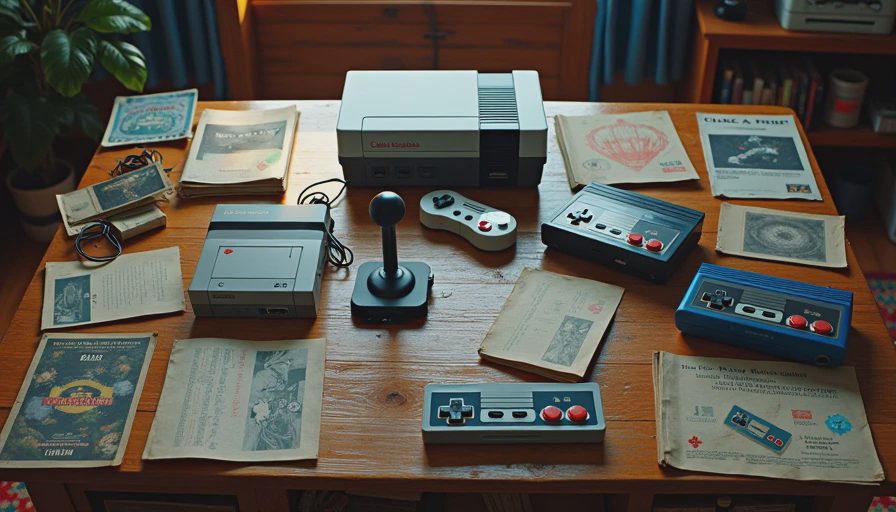
Old consoles occupy a strange place in my house. They are not just hardware, and they are not automatically better because they came from the years when I had fewer responsibilities. They are time machines, sometimes excellent ones, sometimes dusty boxes carrying memories that do not survive a second playthrough. If you are considering old consoles for a weekend return, the useful question is not whether they were important. It is whether they still make sense for your time, television, patience, and current taste.
I write this as someone who grew up with the PlayStation 2, original Xbox, Game Boy Advance, and early PC games, then became the sort of adult who gets a couple of hours after dinner if nobody needs anything. That changes the calculation. A game that required twenty hours of setup and repeated trial and error felt fine at 16. Now, it needs a very good reason to demand that much attention.
What makes old consoles worth revisiting?
The best old consoles still have a clear identity. The GameCube feels immediate, colorful, and unusually friendly for short sessions. The PlayStation 2 has an enormous library, but its value depends on choosing carefully because plenty of games are rough around the edges. The original Xbox offers strong versions of shooters and driving games, often with comfortable controllers and useful save systems. The Nintendo DS remains excellent when you want something compact, inventive, and easy to play for fifteen minutes.
Hardware age itself is not the deciding factor. The question is friction. Can you get the system working without spending Saturday afternoon finding the right cable? Does the game save reliably? Are the controls readable on a modern screen? Is the camera merely old-fashioned, or does it actively fight you? Old consoles earn their place when the answers are manageable and the game delivers something distinctive afterward.
This is also why a remaster can be the better choice. Playing Shadow of the Colossus on modern hardware is usually more pleasant than dealing with an aging disc, while the original version still has historical and visual value. Likewise, The Legend of Zelda: The Wind Waker HD removes some sailing fatigue without removing the game’s personality. Convenience is not betrayal. It is often what gets a good game played again.
The strongest systems for busy adults
For a practical shortlist, start with the PlayStation 2 if you want variety. Ratchet & Clank, Burnout 3, Katamari Damacy, and SSX 3 each offer a different kind of evening. Some are available through modern collections or ports, which makes the decision easier. The PS2 is less appealing when you are determined to own original copies at collector prices, but it remains one of the most useful old consoles for sampling an era.
The GameCube is a better fit for players who value polish and local multiplayer. Mario Kart: Double Dash, Super Mario Sunshine, Metroid Prime, and Pikmin 2 still feel specific rather than generic. Original hardware can be expensive, especially for clean systems and first-party games, so a modern re-release or compatible digital version can make more financial sense. You do not need a shelf full of old consoles to enjoy what they did well.
The Xbox 360 deserves attention because its library sits in a useful middle ground. Games such as Portal 2, Forza Motorsport 4, Skate, and Gears of War remain approachable, and many Xbox 360 titles work through backward compatibility on newer Xbox systems. If you want the period’s feel without accepting every technical inconvenience, this is often the smartest route. Old consoles are not equally valuable, and the 360 frequently gives you the best ratio of setup effort to playable software.
For handheld sessions, the Nintendo DS and Game Boy Advance are still hard to dismiss. Advance Wars, Mario & Luigi: Superstar Saga, Castlevania: Dawn of Sorrow, and Professor Layton can fit around a commute or a tired evening. Screen condition matters, and replacement batteries or upgraded displays can add $30 to $150, but the basic appeal remains strong: start quickly, play briefly, stop without losing the thread.
Original hardware, remasters, or emulation?
The original route makes sense when the physical experience is part of the appeal. The controller, startup sound, disc loading, and slightly soft image can create a feeling that modern menus cannot reproduce. It is also the most expensive path. A working system might cost $70 to $200 depending on the model and condition, while desirable games can range from $15 to well over $100. Prices rise quickly when collecting becomes the goal instead of playing.
A remaster is usually the practical recommendation for a first return. Better resolution, faster loading, achievement support, and improved controls remove problems that had nothing to do with the game’s actual ideas. The catch is that not every remaster is faithful, and some have visual changes that longtime players dislike. Read what changed before buying, especially with music, multiplayer, save systems, or frame-rate behavior.
Emulation can provide excellent results when you own the games and use legal software sources. A small PC, Steam Deck, or compatible handheld can make old consoles feel less like a project and more like a library. The main danger is turning setup into procrastination. If you spend three hours adjusting shaders, controller profiles, and front-end themes, you have not yet revisited anything. Use a stable preset, map the buttons once, and start playing.

The games that age well, and the ones that do not
Old consoles tend to age best when their core loop is simple and expressive. Puzzle games, racing games, platformers, turn-based strategy, and tightly designed action games often survive because they do not rely on outdated presentation. A round of Burnout 3 still communicates its objective immediately. A well-made Mario game still feels responsive within minutes. These are safe choices when you want a satisfying session rather than a historical assignment.
Large open-world games are more complicated. Grand Theft Auto: San Andreas remains fascinating, but its shooting, driving physics, and mission design can feel uneven after modern open worlds. Morrowind offers remarkable freedom, yet its journal, combat, and navigation require patience. These games can still be rewarding, but they need the right mood. Important does not always mean replayable, and a respected game can be better as a memory than a recommendation for a busy weeknight.
Sports games are another case. Annual releases lose some appeal when rosters and online services disappear, but a strong career mode or arcade system can keep one alive. SSX 3, NBA Street Vol. 2, and Mario Strikers remain easier to recommend than many licensed sports titles because their identity is not tied entirely to current teams.
A simple test before you buy
Before spending money on old consoles, choose one game you genuinely want to play rather than a system you want to possess. Check whether the game is available on a modern platform, then compare the total cost: hardware, cables, memory cards, controllers, the game, and perhaps a scaler for a modern television. A $40 port is cheaper than a $180 setup when the goal is one campaign.
Next, decide how much friction you will tolerate. If you enjoy cleaning contacts and hunting for adapters, original hardware can be part of the hobby. If you only want to play after work, prioritize backward compatibility, digital collections, or a well-configured handheld. This is where old consoles become a personal choice instead of a ranking exercise.
Finally, give the game one honest hour. Do not force yourself through a celebrated classic because a forum says you should. Notice whether the controls make sense, whether the pacing respects your schedule, and whether you are curious to continue. If the answer is no, move on without guilt. There are too many worthwhile games to confuse obligation with enjoyment.
The honest recommendation
Old consoles are still worth loading, but not all at once and not without a plan. Pick the system that serves the game you want, favor versions that remove needless friction, and let nostalgia introduce a title without giving it a free pass. The PlayStation 2 remains the broadest starting point, the GameCube offers concentrated quality, the Xbox 360 gives modern convenience through compatibility, and Nintendo handhelds are ideal for short sessions.
If you have six hours this weekend, choose one game, one version, and one comfortable way to play it. That is enough. The goal is not to rebuild 2003 in your living room. It is to find out whether a game still has something to say when you bring older eyes, less time, and better alternatives. Sometimes the answer is yes. Sometimes the right conclusion is that the memory was the best version. Both are useful discoveries.

No signals yet — transmit the first.