The best games of 2000s are not automatically the games I remember most fondly. Some changed the medium, some consumed entire summers, and some are better left as memories. Coming back to them now, with work, family, and limited weekend hours, requires a more useful question: would I still recommend this to a busy adult in 2026? This list focuses on games that remain enjoyable, understandable, and worth the setup time, not merely historically important.
What makes a 2000s game hold up?
A game from this era earns a recommendation through more than nostalgia. Controls need to feel predictable, pacing should survive modern attention spans, and the core loop should become fun quickly rather than after five hours of tutorial missions. Presentation can look old, but unnecessary friction is harder to forgive. Long loading screens, awkward camera systems, save-point restrictions, and escort missions all matter when you have one evening available.
That does not mean every pick must feel modern. Part of the appeal is seeing design choices that disappeared. A focused campaign, a strange menu system, or a level built around one clever idea can feel refreshing beside enormous open worlds. The best games of 2000s usually have a strong identity. You can explain why they are fun in one sentence, and that reason still makes sense after the opening nostalgia wears off.
The essential first picks
If you want a short starting list, begin with the games that combine memorable design with manageable commitment. Half-Life 2 remains an excellent single-player shooter because its physics, pacing, and environmental storytelling work together instead of competing for attention. Portal, released at the end of the decade, is even easier to recommend: its compact puzzles and dry writing make it ideal for several short sessions.
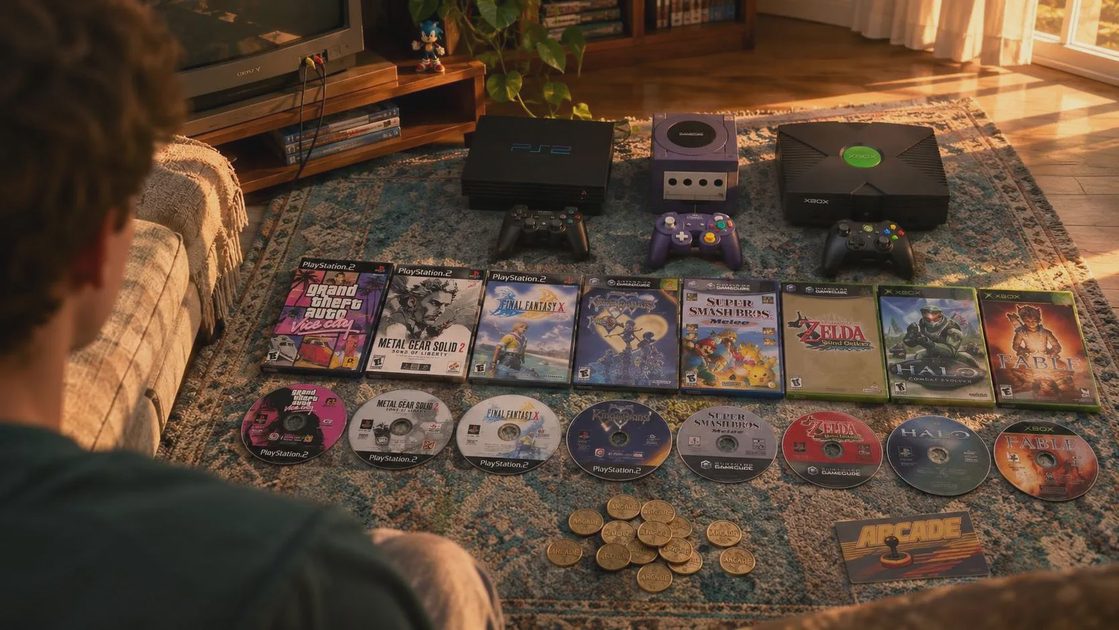
On consoles, Resident Evil 4 still has a satisfying rhythm of exploration, combat, and resource management. The over-the-shoulder aiming influenced years of action games, but the original remains entertaining on its own terms. The Legend of Zelda: The Wind Waker has a softer pace and a bright visual style that aged better than many realistic games from the same period. Its sailing can drag, yet the dungeons, music, and expressive animation carry it through.
For something more immediate, Burnout 3: Takedown is difficult to beat. Its crash-heavy racing rewards aggression without demanding a simulation setup, and individual events are short enough for a tired weeknight. These are practical recommendations, not a claim that every influential release deserves equal time.
The role-playing games worth the hours
Role-playing games are where nostalgia can become expensive. A celebrated game can require 60 hours before its strongest ideas appear, which changes the recommendation for an adult player. Mass Effect still deserves attention because its conversational choices, squad relationships, and science-fiction setting create momentum even when the shooting feels dated. The Legendary Edition is the sensible route for most new players because it reduces technical friction and keeps the trilogy accessible.
The Elder Scrolls IV: Oblivion is more uneven. Its world is full of memorable quests, odd characters, and freedom, but the leveling system and facial animation can interrupt the fantasy. I would recommend it to someone who enjoys wandering and experimenting, not to someone seeking a tightly paced adventure. Fallout 3 has a similar tradeoff: its atmosphere and exploration remain strong, while gunplay and repeated interiors show their age.
Persona 4 is a better fit for players who want structure and character development, though its school calendar demands patience. It is one of the best games of 2000s for a long winter project, not a casual weekend download. Knowing the commitment before starting is part of making a good choice.
Multiplayer and replayable standouts
The best games of 2000s are not limited to cinematic campaigns. Super Smash Bros. Melee remains mechanically deep, responsive, and easy to understand at a basic level. Its competitive ceiling is enormous, but a few local matches can still provide immediate fun without studying frame data. Mario Kart: Double Dash!! is less technically refined than later entries, yet its paired-character mechanic gives it a distinct identity that still works with friends.
On Xbox 360 and PlayStation 3, Left 4 Dead 2 is one of the safest recommendations for a group. Each campaign can fit into a reasonable evening, the director keeps runs from feeling identical, and teamwork matters without requiring a voice-chat marathon. Modern matchmaking and platform availability can affect the experience, so the game is strongest when you already have a small group ready to play.
For PC players, Civilization IV remains compelling if you want a turn-based game that can be paused indefinitely. It is also dangerous for the same reason: a quiet hour can disappear quickly. Strategy games age well when their systems are deep rather than dependent on visual technology.
Games that need the right expectations
Some famous releases belong on a different kind of list. Shadow of the Colossus is still striking, but its camera and climbing behavior can test your patience. The original Assassin's Creed has a fascinating setting and a strong sense of place, yet its mission structure repeats too quickly. Metal Gear Solid 4 delivers memorable scenes and ambitious ideas, though its long cutscenes make it a poor choice when you want active play after a busy day.
These games are not failures. They are examples of why the best games of 2000s should not be ranked only by reputation. A technically important game can be better as a memory than a recommendation. If you have six hours this weekend, choose the title with the cleanest path to its strengths rather than the one with the loudest historical importance.
How to choose your next replay
Start with your available time, then choose the appropriate format. For two or three evenings, pick Portal, Burnout 3, Left 4 Dead 2, or Half-Life 2. For a longer project, Mass Effect, Persona 4, Fallout 3, or Oblivion can reward steady progress. If you want local multiplayer, select Melee or Double Dash!! and focus on the people you will play with rather than online rankings.
Version matters too. A remaster can improve resolution, loading, controller support, and save convenience, but it can also change lighting, audio, or the visual character you remember. Before buying, check whether the modern release includes the original campaign and downloadable content. Spending $20 to $40 on a reliable version is often better than saving a few dollars on a frustrating port.
The best games of 2000s still offer plenty of value, but they ask you to meet them honestly. Some remain great because their mechanics are timeless. Others survive because their mood, writing, or unusual ideas cannot be replaced by newer technology. Start with the game that matches your time and patience, not the game you feel obligated to admire. That is the difference between revisiting a classic and simply replaying an old habit.
No signals yet — transmit the first.