Video games from childhood have a strange advantage: they arrive with a full soundtrack of memory attached. A startup screen, a menu jingle, or the feel of an old controller can take me straight back to a bedroom in the early 2000s. But memory is not the same thing as a recommendation. With work, family, and maybe six free hours on a weekend, I want to know whether an older game is still enjoyable now, not merely important to me once.
That is the test behind this list. I am not asking whether a game changed the industry or helped define a console generation. I am asking whether it controls well, respects my time, creates satisfying problems, and gives me a reason to keep playing after the nostalgia wears off.
Start with the feeling, not the release date
The best video games from childhood usually have a clear physical identity. Super Mario World still feels precise because Mario responds immediately and the levels teach through layout rather than long explanations. Tony Hawk's Pro Skater 3 remains easy to recommend because a short session can become a satisfying chain of tricks within minutes. The original Halo still has a strong argument because movement, weapon feedback, and enemy behavior work together without requiring a tutorial every time you pick up the controller.
Those games are old, but their central actions remain legible. You run, jump, shoot, skate, explore, or solve a problem, and the game makes the result understandable. That matters more than texture resolution. A dated menu is tolerable when the actual play feels direct. A glossy remaster cannot rescue a game whose basic movement was never enjoyable.
I also look for a quick path back in. If a game takes 45 minutes to become interesting, it is a poor fit for a busy adult unless the payoff is exceptional. Games that let me save frequently, restart a level quickly, and understand my next objective are much easier to revisit than sprawling adventures built around long stretches of travel.
Nostalgia can hide expensive friction
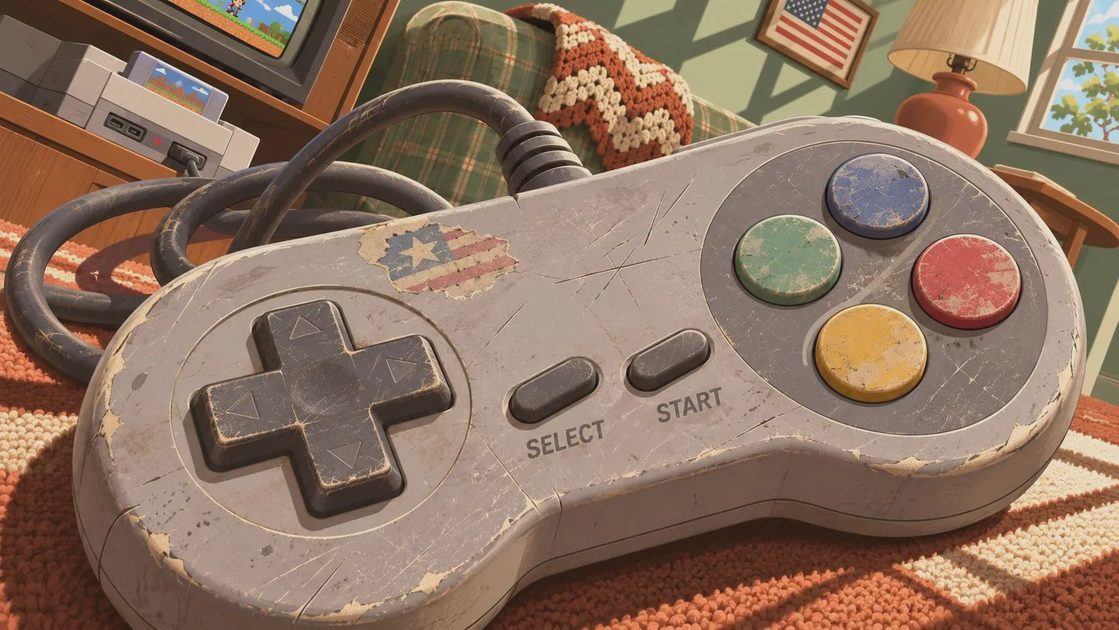
Some video games from childhood are better as a memory than a recommendation. I remember spending entire afternoons with certain licensed action games, but returning to them reveals stiff camera controls, repetitive missions, and checkpoints placed far too far apart. At age twelve, restarting a difficult section felt like part of the adventure. At 38, after a full workday and bedtime routines, it feels like the game is charging me for my limited time.
The same problem affects older role-playing games. A huge map and 60-hour story sounded generous when I had summer vacation. Today, a slow opening, random battles every few steps, and limited inventory space can turn a promising game into homework. That does not make the design worthless. It means the right verdict might be “historically valuable, personally skippable.” Important does not always mean replayable.
Before reinstalling an old favorite, I ask three practical questions. Can I reach the enjoyable part in one evening? Can I save without consulting a guide? Will the controls frustrate me before the atmosphere has a chance to work? Honest answers prevent a weekend from disappearing into a game I only love in screenshots.
The console generation changes the answer
The platform you use can make video games from childhood feel either comfortably familiar or surprisingly awkward. GameCube and PlayStation 2 games often benefit from modern televisions and wireless controllers, but their camera behavior can expose the age of the design. Original Xbox titles may look cleaner through backward compatibility, while some early PC games need community patches, widescreen fixes, or controller mapping before they feel usable.
The Nintendo DS is another case. Its dual-screen layouts and touch controls were often designed around hardware that no longer sits naturally in a living room. A remaster can improve resolution but cannot always reproduce the original rhythm. Conversely, many Game Boy Advance games remain excellent on a modern handheld because their compact levels suit short sessions better than they did when I was a kid.
Version choice deserves more attention than collector arguments usually give it. A digital rerelease is often the sensible option if it includes reliable saves and readable menus. A remaster is worth paying extra for when it improves frame rate, camera behavior, loading, or accessibility without damaging the original pacing. If the best version requires expensive hardware and a fragile disc, I would rather play something else.
What still works for a limited schedule
For adults revisiting video games from childhood, structure is often more important than scale. A 10-hour campaign with strong chapters can be more rewarding than a 50-hour open world filled with errands. The original Resident Evil 4 remains a strong weekend choice because its encounters have momentum and its chapters create natural stopping points. Portal is even more efficient: its puzzles are distinct, its humor does not overwhelm the play, and each session has a visible sense of progress.
Sports and racing games need a different standard. Older entries can be fun when their handling model is distinctive, but rosters, licenses, and online features age quickly. Burnout 3: Takedown still earns attention through aggressive arcade driving and immediate crashes, while a yearly sports game from the same era may feel empty once its teams and menus become historical artifacts.
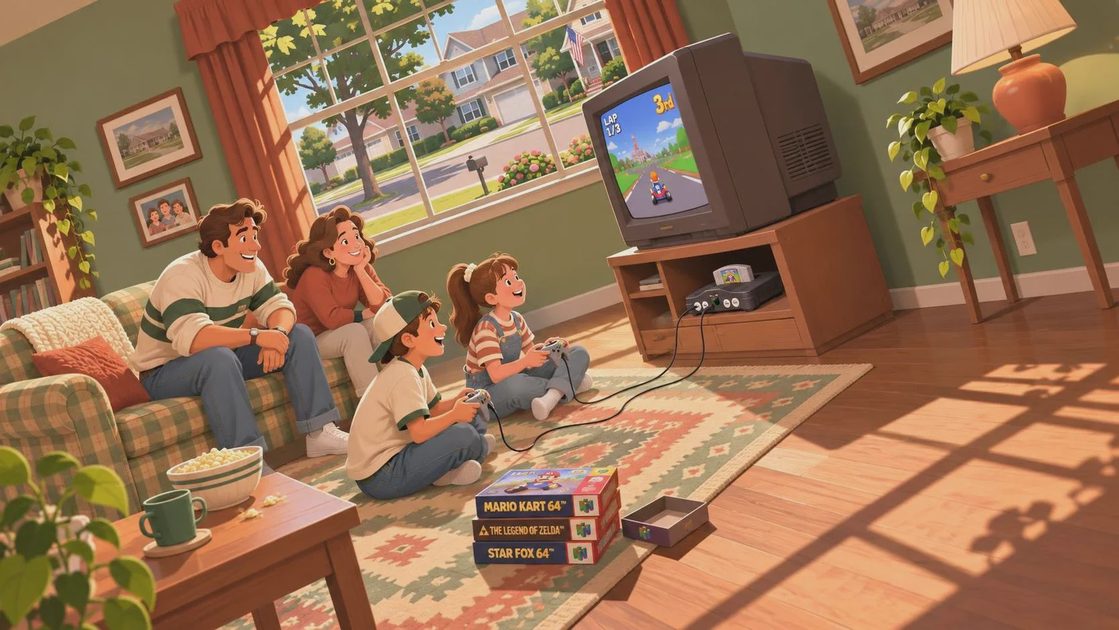
Multiplayer memories are especially dangerous. Mario Kart: Double Dash or Halo 3 may still be excellent with the right group, but the recommendation depends on finding people who want the same evening. A game that requires four friends, original accessories, and a carefully arranged television setup is not automatically a bad game. It is simply a different kind of commitment than solo replaying.
A simple replay test before you commit
When I return to video games from childhood, I use a short process instead of promising myself an enormous campaign. First, I play for 30 minutes without a guide. I want to feel the controls before outside advice starts doing the work. Second, I test the save system and note whether stopping is convenient. Third, I play one complete mission, race, stage, or puzzle sequence. That reveals more than watching a retrospective.
Next, I write down one thing that feels better than remembered and one thing that feels worse. In Ratchet and Clank, the weapon variety may still surprise me, while the camera can require patience. In The Legend of Zelda: The Wind Waker, the art direction may remain inviting, while sailing between objectives can test modern attention spans. The point is not to punish old design for failing to be new. It is to identify the friction clearly.
If the game is still calling after two sessions, continue. If I am forcing myself to admire it, stop. There is no prize for finishing every childhood favorite.
The honest call
The most valuable video games from childhood are not necessarily the ones with the strongest emotional pull. They are the ones whose core decisions remain interesting after the old packaging falls away. Some deserve a full replay, some deserve a remaster, and some should stay safely in memory.
My advice is to choose one game that offers immediate play, dependable saving, and a campaign you can actually finish. Do not begin with the title you feel obligated to love. Begin with the one whose mechanics still sound fun tonight. That might be a platformer, a compact shooter, a puzzle game, or an arcade racer rather than the giant role-playing epic you remember most vividly.
Video games from childhood can still deliver a great evening, but nostalgia should open the door, not make the final decision. Load the version that is easiest to play, give it a fair two-session test, and let present-day enjoyment decide whether it stays installed.

No signals yet — transmit the first.