The Question I Keep Asking
I've been thinking a lot about what makes an old game worth revisiting.
Not all of them are. Some classics are better left as memories. Others are still worth your time in 2026.
But how do you tell the difference?
I've been asking myself this question for months. I've been building a framework. A set of criteria that helps me decide which old games are worth going back to and which ones I should let go.
Here's what I've come up with.
The Framework
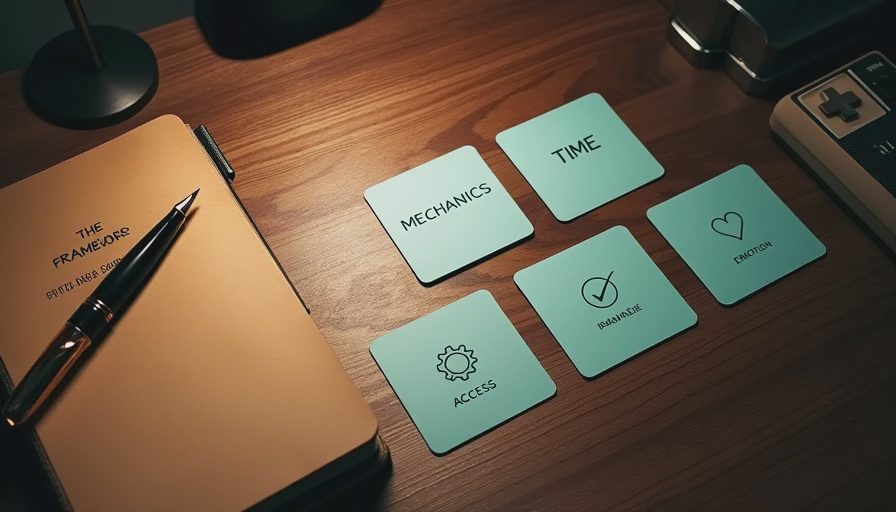
I evaluate old games on five criteria.
Timeless Mechanics. Does the gameplay still feel good? Is it satisfying to play? If the core mechanics are still enjoyable, the game has a chance.
Respect for Time. Does the game waste your time? Is there padding, grinding, or filler? If the game respects your limited time, it's worth considering.
Unique Experience. Does the game offer something you can't get from a modern game? If it's a unique experience, it's worth revisiting.
Emotional Connection. Does the game still make you feel something? If the writing, atmosphere, or characters still resonate, it's worth playing.
Accessibility. Can you actually play the game in 2026? Is it available on modern platforms? Does it run well? If the barrier to entry is high, it's harder to recommend.
A game doesn't need all five. But the more it has, the more likely it is to be worth your time.

Timeless Mechanics
This is the most important criteria for me.
If the mechanics are clunky, I don't want to play it. No matter how good the story is, if the combat is frustrating or the controls are awkward, I'm not going to enjoy myself.
Portal is a great example. The mechanics are simple and satisfying. You shoot portals, you solve puzzles. It still feels good in 2026.
Burnout 3 is another. The sense of speed is still thrilling. The takedowns are still satisfying.
On the other hand, some games have mechanics that haven't aged well. Early 3D games often have clunky controls. Games that relied on motion controls are hard to play on modern hardware.
If the mechanics are still good, the game is worth considering.
Respect for Time
This is especially important for busy adults.
Some old games are full of padding. They have grinding, fetch quests, and repetitive content. In 2026, I don't have time for that.
If a game respects your time, it's worth revisiting. If it wastes your time, it's probably better left in the past.
Portal is short and focused. It doesn't waste your time. Fallout: New Vegas is long but respectful—every quest adds something to the experience.
Some games from the 90s are full of padding. They were designed to stretch playtime. Those games are harder to recommend in 2026.
Unique Experience
Some old games offer something modern games don't.
Maybe it's the atmosphere, the art style, or the narrative design. Maybe it's a mechanic that hasn't been replicated.
These games are worth revisiting because they're unique. You can't get the same experience from a modern game.
Shadow of the Colossus is a great example. There's nothing quite like it. The atmosphere is unique. The sense of scale is incredible. It's worth playing in any era.
Ico is another. It's a simple game about escorting a girl through a castle. But the atmosphere, the connection between characters, and the minimal storytelling are unique.
Emotional Connection
Some games stay with you. They make you feel something. The characters, the story, the world—they resonate.
These games are worth revisiting because they matter to you. The emotional connection is real.
Fable II is a game I loved. I replayed it recently, and I still felt the connection. The world, the humor, the dog companion—they still worked for me.
Some games are better remembered than replayed, but the ones that still make you feel something are worth the revisit.
Accessibility
Can you actually play the game in 2026?
If it's on modern platforms, great. If it's trapped on outdated hardware, it's harder to recommend.
Portal is available everywhere. PC, Xbox, PlayStation, Switch. It's cheap and easy to play.
Some classic games are stuck on old hardware. You need to buy a retro console, find a copy of the game, and figure out how to connect it to a modern TV. That's a high barrier to entry.
Emulation helps, but it's not always easy. If the game is available on modern platforms, it's easier to recommend.
My Criteria in Practice
Let me apply my framework to some recent games.
Burnout 3. Timeless mechanics? Yes. The racing and takedowns still feel great. Respect for time? Yes. The events are short and focused. Unique experience? Yes. Nothing else quite feels like Burnout. Emotional connection? Yes. It's a game I loved. Accessibility? It's available on Xbox backward compatibility. Verdict: Worth the Replay.
Fable II. Timeless mechanics? No. The combat is clunky. Respect for time? Yes. The quests are short and focused. Unique experience? Yes. The humor and world are unique. Emotional connection? Yes. I loved it. Accessibility? It's available on Xbox backward compatibility. Verdict: Worth it for nostalgia, but with lowered expectations.
Some PS2 RPG. Timeless mechanics? No. The combat is dated. Respect for time? No. Lots of grinding and padding. Unique experience? Maybe. Emotional connection? Probably. Accessibility? Hard to play on modern hardware. Verdict: Better remembered than replayed.
The Bottom Line
Not every classic is worth revisiting. But some are.
The games that hold up have timeless mechanics, respect your time, offer unique experiences, create emotional connections, and are accessible.
If a game checks enough of these boxes, it's worth your time.
If it doesn't, it's probably better left as a memory.
Important doesn't always mean replayable. But when the criteria align, it's worth going back.
Still worth loading? That's the question I answer every time.

No signals yet — transmit the first.