Old PC games have a particular kind of pull. You remember the box art, the startup sound, and the feeling that a game could occupy an entire winter. Then you install it again and discover tiny text, awkward controls, missing widescreen support, and a tutorial that assumes you already read the manual. The question is not whether old PC games were important. Many were. The useful question is whether they still deserve your limited free time now.
That is the standard I use when revisiting them. A game does not get a free pass because it influenced shooters, invented a strategy convention, or consumed half your adolescence. It needs a workable interface, a pace that survives modern schedules, and a central idea that still feels good after the nostalgia wears off. Some old PC games pass easily. Others are better as a memory than a recommendation.
What Makes an Older PC Game Hold Up
The strongest old PC games usually have a clear mechanical identity. Doom is still immediate because movement and shooting remain satisfying without explanation. SimCity 2000 can still absorb an evening because its systems are readable, expressive, and easy to approach in short sessions. The original Deus Ex remains compelling because its levels give you several ways to solve a problem, even when its character models and shooting feel rough.
Age matters less than friction. A dated visual style is usually harmless; a save system that wastes twenty minutes is not. Mouse sensitivity, resolution scaling, controller support, subtitle size, and reliable cloud saves can determine whether a supposedly great game feels welcoming or exhausting. Old PC games that respect your time tend to survive better than technically impressive releases built around long loading sequences and repetitive errands.
I also separate historical importance from replay value. Quake changed the shape of PC action, but a new player may prefer Half-Life 2 if they want a more guided experience. Baldur's Gate helped define computer role-playing, while its real-time-with-pause battles and dense quest journal can require patience. Both are valuable, but valuable does not mean equally convenient on a Tuesday night after work.
Old PC Games That Still Feel Good Today
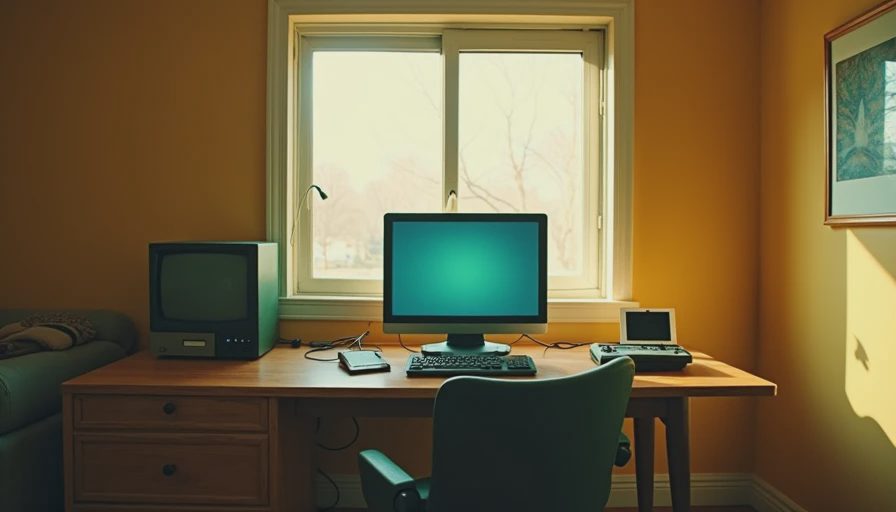
For a practical starting list, begin with games whose core loop is easy to understand within ten minutes. RollerCoaster Tycoon 2 remains a wonderful example: build rides, manage guests, solve small disasters, and watch a park become a story. The interface is old, but the game gives constant feedback and rarely demands a huge uninterrupted commitment.
Civilization IV is another strong revisit for players who enjoy planning rather than reflexes. Its turns make it easy to stop, and its strategic choices remain meaningful long after the novelty of discovering a technology tree disappears. If you want something faster, F.E.A.R. still delivers sharp combat and tense atmosphere. Its story is less memorable than its firefights, but that is not a serious weakness when the action remains this clean.
The best old PC games also make useful weekend projects. Install patches, adjust the field of view, map a few keys, and then play for an hour before deciding whether the return is working. Do not spend three nights rebuilding a setup for a game you are already forcing yourself to enjoy. A simple configuration through Steam, GOG, or a trusted community patch is usually preferable to turning nostalgia into unpaid technical support.
The Games That Need a Warning Label
Some old PC games are still excellent, but the entry cost is higher than memory suggests. Early first-person shooters can feel painfully slow once you have grown used to modern checkpointing and generous movement. Classic real-time strategy games often expect you to memorize hotkeys, manage several production queues, and understand unit counters without much explanation. That can be satisfying, but it is not automatically relaxing.
Adventure games create a different problem. Grim Fandango remains stylish and funny, yet its original inventory puzzles can be opaque enough to stop a busy player cold. The Secret of Monkey Island is easier to recommend because its writing and pacing remain inviting, especially in the special edition. With old PC games, the question is often whether you can accept one stubborn design choice in exchange for the rest of the experience.
Multiplayer deserves extra caution. A beloved arena shooter may need a community server browser, a fan patch, or a private group before it becomes playable. A game that once had thousands of opponents can now feel empty outside scheduled events. That does not make it worthless, but it changes the recommendation from “install tonight” to “find your group first.”
Choosing the Right Version
Version hunting can save more time than it costs if you follow a simple order. First, look for a modern digital release from GOG or Steam with community support and recent user notes. Next, check whether the package includes widescreen fixes, soundtrack files, manuals, or compatibility settings. Then search for a reputable patch only when the base version has a specific problem.
Do not assume a remaster is automatically better. Age of Empires II: Definitive Edition is an unusually convenient way to revisit a landmark strategy game, but some players prefer the visual tone and menus of the original. The StarCraft remaster preserves the familiar structure while improving display options, whereas a fan-made source port can be the best route for an old shooter. Read the version details before paying twice for the same memory.
A controller is not always an upgrade. Games built around mouse targeting, keyboard shortcuts, or inventory grids often feel better with the original input method. Conversely, platform-style games and racing titles can benefit immediately from an Xbox controller. Small adjustments such as borderless window mode, integer scaling, and a larger font can matter more than a new graphics card.
A Sensible Test Run for Old PC Games
Give each candidate a 60-minute trial. Spend the first ten minutes getting the display and controls comfortable. Use the next twenty minutes on the main activity rather than menus or optional collectibles. Then ask whether you are curious about the next hour, not whether the game matches your memory. Curiosity is a stronger signal than guilt.
If the opening is slow, try one focused session rather than abandoning the game immediately. Some role-playing games need an hour to reveal their systems. Still, set a limit. A busy adult can lose an entire weekend trying to recover a feeling that belonged to a different age. Old PC games should earn a second session through atmosphere, decisions, humor, or tactile satisfaction.
Keep a short list instead of reinstalling everything at once. Choose one action game, one strategy game, and one story-driven title. That gives you variety without creating another backlog. I usually start with a game that works in 30-minute pieces, because finishing a small chapter feels better than repeatedly postponing a sprawling campaign.
The Honest Call
Old PC games are worth loading when their central pleasure remains intact and the setup does not become the main event. Doom, RollerCoaster Tycoon 2, Civilization IV, F.E.A.R., and selected adventure games still offer clear reasons to play. Other celebrated releases deserve respect, a video retrospective, or a carefully chosen excerpt rather than a full replay.
The right expectation is not that an older game will feel modern. It should feel distinct, confident, and rewarding enough to justify its rough edges. Some old PC games are still worth loading with the right expectations. Others are important without being replayable. If you have six hours this weekend, pick the one with the shortest path from installation to fun, make one sensible adjustment, and let the game prove itself.


No signals yet — transmit the first.