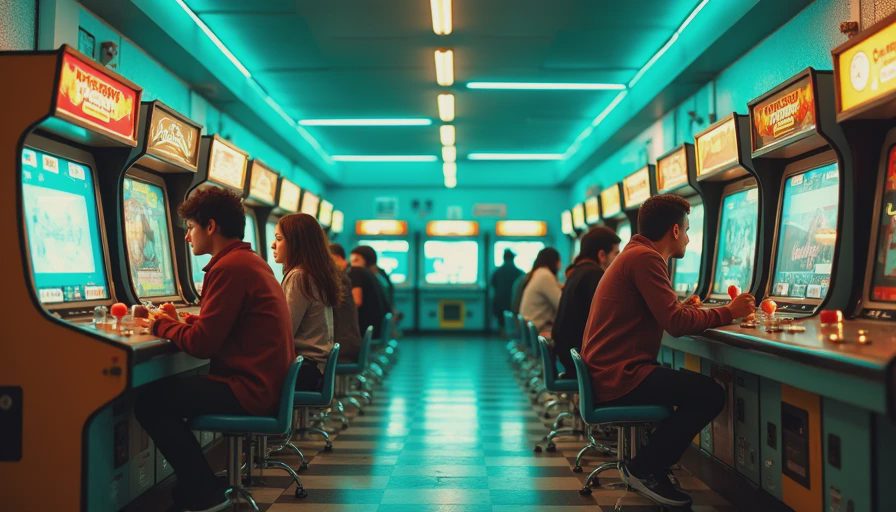
90s arcade games occupy a strange place in my gaming memory. I remember the bright cabinets, the heavy buttons, the attract-mode music, and the feeling that one more quarter might finally produce a better run. Coming back as a busy adult is different. A game that felt enormous at age twelve can feel shallow after twenty minutes, while a supposedly simple fighter or shooter can still make an entire evening disappear. The useful question is not whether these games were important. It is whether they are still worth loading now.
Why the best arcade games still work
The strongest 90s arcade games waste almost no time. You choose a character, ship, car, or fighter, and the rules become clear through movement. There is no long tutorial, inventory screen, or story briefing asking you to remember six factions before the action begins. That directness is valuable when you have an hour after work rather than an entire Saturday.
Good arcade design also creates a readable loop. You learn an enemy pattern, miss a jump, recognize a safer route, and try again with slightly better judgment. The difficulty is often severe, but it is usually visible. You can tell why a boss defeated you, even if the answer is that your timing was poor. Games such as Metal Slug, Street Fighter II, Daytona USA, and Star Fox felt immediate because every input had a clear result.
That clarity separates a durable classic from a museum piece. Plenty of 90s arcade games were technically impressive for their era but awkward to play today. The best ones still communicate quickly, respond cleanly, and give you a reason to attempt another run instead of simply demanding more coins.

The fighting games worth revisiting
Fighting games are probably the safest place to start with 90s arcade games because their basic appeal survives aging hardware. Street Fighter Alpha 3 remains generous with characters and systems, though its menus and presentation can feel busy. The King of Fighters '98 is more demanding, but its neutral game and team format reward short, focused sessions. If you want something less technical, Marvel vs. Capcom 2 delivers chaotic matchups and spectacular screen-filling attacks almost immediately.
The honest catch is that arcade fighters were built around repeated practice and competition. A modern player facing the computer may find the difficulty inconsistent, especially in later matches. Some opponents seem predictable until they suddenly punish every mistake. Local multiplayer or online play improves the experience, but online communities and modern ports differ considerably by game.
I would start with Street Fighter Alpha 3 for a broad single-player sampler, then move to The King of Fighters '98 if you enjoy learning matchups. Mortal Kombat 3 still has a memorable mood and satisfying impact, but its stiff movement and awkward combo expectations make it better as a short nostalgia visit than a main recommendation.
Run-and-gun action still has the strongest pull
The best 90s arcade games often deliver their personality through movement rather than story. Metal Slug is the obvious example. Its hand-drawn animation remains funny and expressive, and the campaign constantly adds a new visual joke: a collapsing bridge, a ridiculous vehicle, or a soldier reacting to a blast. You can finish a stage in a few minutes, which makes it ideal for adults fitting games between dinner and bedtime.
Contra: Hard Corps is faster, harsher, and less forgiving. It is thrilling when your hands remember what to do, but first-time players can bounce off its instant deaths and crowded boss fights. Gunstar Heroes is a better entry point for many people because its weapon combinations and flexible movement create more room for experimentation. It feels designed rather than merely difficult.
Alien Soldier deserves a mention for experienced players who want a focused challenge. Its boss encounters are inventive, but the game assumes serious commitment. I would not recommend starting there after a long break from retro action. Load Metal Slug or Gunstar Heroes first, then see whether your patience survives the more punishing options.
Racing, shooting, and the appeal of short sessions
Some 90s arcade games remain excellent because they turn a small amount of time into a complete experience. Daytona USA is still easy to understand: pick a course, push hard, slide around traffic, and chase a better finish. Its handling is not a modern simulation, but that is the point. You are not adjusting tire compounds or studying telemetry. You are trying to take the next corner without losing momentum.
Time Crisis also holds up when played with the appropriate light-gun setup or a practical modern alternative. Its cover-and-pop rhythm feels distinct from ordinary shooters, although recreating the original arcade setup can be inconvenient. House of the Dead has a similar strength as a group game. It is campy, direct, and more enjoyable with friends than as a serious solo campaign.
For vertical shooting, DoDonPachi and Radiant Silvergun offer remarkable depth, but they are not casual recommendations. Their bullet patterns and scoring systems can consume weeks. If you want a gentler first step, try R-Type Delta or a classic Gradius title. These games still demand concentration without requiring you to understand an entire competitive scoring culture.
What feels dated now
Not every celebrated cabinet deserves a full replay. Some 90s arcade games rely on sluggish 3D controls, awkward camera angles, or an unreasonable number of continues. Early polygonal racing games can look charming in screenshots but feel like steering a shopping cart once you are used to modern analog control. Certain beat 'em ups also reveal their age through repetitive enemies and inflated stage length.
The quarter-fed structure is another issue. Original arcade difficulty often existed to encourage another payment, not to provide a carefully balanced home experience. Unlimited continues can remove the tension, while strict emulation settings can make a game feel unnecessarily hostile. I usually play with a modest continue limit, then decide whether the challenge feels meaningful or merely inherited from the cabinet.
Graphics are rarely the real problem. A game can have jagged polygons and still feel great if its controls are precise. Conversely, a colorful sprite showcase can become exhausting when every stage repeats the same encounter. The test is simple: after losing, do you understand what to improve, or do you just want the session to end?
How I would build a weekend shortlist
For a first weekend with 90s arcade games, I would choose one fighter, one action title, one racer, and one shooter. Street Fighter Alpha 3 provides variety and quick matches. Metal Slug supplies the instantly readable campaign. Daytona USA offers a change of pace, while Gunstar Heroes gives you a deeper action game without requiring a huge time investment.
Use a current collection or legitimate port when possible, especially one with quick save options, button remapping, and display settings. Original hardware has atmosphere, but rising prices and aging parts can turn a simple revisit into a repair project. A good controller matters more than a perfect scanline filter. If the buttons feel wrong, no amount of nostalgia will fix the experience.
Give each game thirty focused minutes before making a judgment. The first few minutes may be spent remembering jump arcs, attack ranges, or menu quirks. After that, ask whether the game creates curiosity. If it does, keep going. If it feels like homework, move on without guilt. Your childhood affection is valid, but it does not obligate you to replay everything.
The honest recommendation
The finest 90s arcade games are still worth loading because they respect short sessions and make their ideas obvious. Metal Slug, Street Fighter Alpha 3, Gunstar Heroes, and Daytona USA remain easy recommendations for different reasons. They have style, mechanical clarity, and enough depth to reward another attempt without demanding that you rebuild your teenage schedule.
Other classics are better as memories than recommendations. That is not an insult. Some games mattered because they were shared events in a noisy arcade, not because their solo campaigns remain comfortable in 2026. If you approach 90s arcade games with that distinction in mind, the good ones become easier to appreciate and the dated ones easier to leave behind. Important does not always mean replayable, but the right cabinet can still turn a spare hour into a genuinely great night.


No signals yet — transmit the first.