The best playstation 2 games still offer something that many modern releases bury under map icons, season passes, and 60-hour runtimes: a clear idea of what they want to be. That does not mean every game from Sony's second console deserves a return visit. Some are better as memories, some need patience, and a few remain remarkably easy to recommend to a busy adult in 2026.
I approach this library as someone with a job, a family, and limited evening energy. If I have six hours this weekend, I want to know whether a game gets interesting quickly, whether its controls fight me, and whether its best moments arrive before the credits. Nostalgia gets a seat at the table, but it does not get the final vote.
Where the PS2 library still feels special
The strongest playstation 2 games were unusually confident about structure. Shadow of the Colossus gives you a small number of enormous encounters and lets the atmosphere do the work. Katamari Damacy builds a strange, cheerful loop around rolling objects into a growing ball. Burnout 3: Takedown turns arcade racing into a succession of immediate decisions, spectacular crashes, and short sessions.
Those games remain useful recommendations because their identities are obvious within minutes. You are not spending the first night unlocking tutorials, comparing skill trees, or reading a database. The hardware limitations helped create focus. Levels were often smaller, menus were simpler, and a two-hour session could produce a satisfying sense of progress.
That focus is also why some famous releases have aged better than technically impressive ones. A game with rough textures can survive. A game built around slow menus, unclear objectives, or constant backtracking has a harder time competing for your attention now.
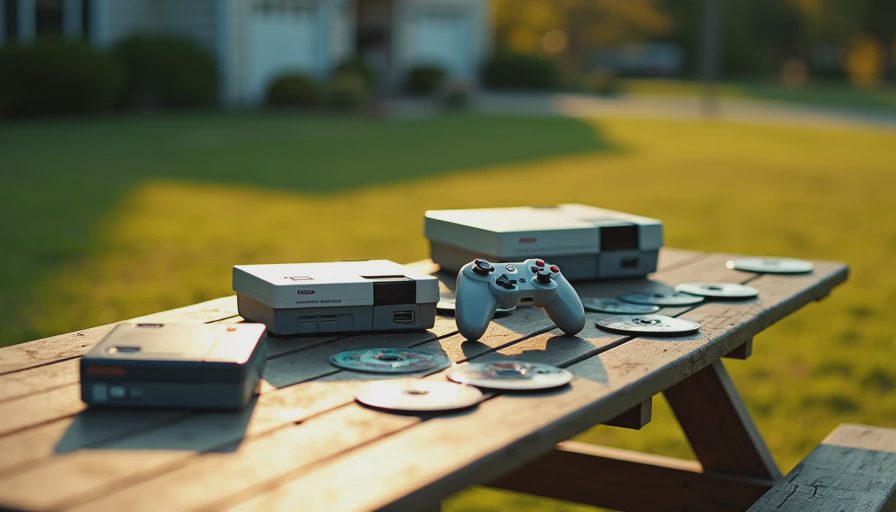
A practical shortlist for different moods
For action, Devil May Cry 3: Dante's Awakening remains the demanding choice. It expects practice, but its combat has enough depth to reward learning rather than random button pressing. God of War is the smoother alternative: louder, more direct, and easier to finish during a crowded month.
For open-world play, Grand Theft Auto: San Andreas still has personality and variety, although its shooting and driving can feel loose. Bully is smaller and more manageable, with a school setting, compact errands, and a stronger sense of routine. For stealth, Metal Gear Solid 3: Snake Eater has memorable characters and a patient rhythm, but its camera and control layout require a genuine adjustment period.
For racing, Gran Turismo 4 is ideal if you want a serious progression system, while Burnout 3 is better when you want immediate fun. For local multiplayer, Mario Kart: Double Dash!! is not technically a PS2 release, but it belongs in the same era conversation; on the actual PS2, TimeSplitters: Future Perfect offers fast matches and a playful campaign. These playstation 2 games do not all serve the same purpose, which is exactly why a mood-based shortlist works better than a universal ranking.
The controls are the real test
Returning to playstation 2 games often means returning to pressure-sensitive buttons, fixed cameras, and an assumption that you will learn through failure. That can be charming in a focused action game and exhausting in a platformer that makes you repeat a long section after one missed jump.
Start with the camera. In Kingdom Hearts, the original camera can make crowded fights harder than the underlying combat deserves. In Onimusha 3, movement and presentation still create a strong samurai-action mood, but the game feels more rigid than a current character-action release. Give yourself twenty minutes before deciding the controls are unbearable, then be honest about whether the friction adds tension or merely wastes time.
A modern controller can help, but it cannot rewrite design assumptions. Remapping buttons, increasing display clarity, and using a save-state feature where legally available can remove needless repetition. They cannot make every escort mission enjoyable. The goal is not to preserve every inconvenience as a historical artifact; it is to preserve the parts that still make the game distinct.
Story games need a different kind of patience
Some playstation 2 games are worth revisiting for tone more than mechanical polish. Shadow Hearts: Covenant mixes turn-based combat with an unusual gothic mood. Persona 4 is a long commitment built around relationships, routine, and repetition, so it suits a player who wants a companionable seasonal project rather than a quick weekend finish. Final Fantasy X remains one of the safer entry points for someone curious about the era's large, melodramatic role-playing games.
The tradeoff is pacing. Older story games often spend longer introducing systems, repeat exposition, or lock key scenes behind extended travel. Voice acting can be uneven, and localization choices sometimes feel tied to their period. I would not recommend starting a 70-hour role-playing game simply because its reputation is enormous. Pick one whose setting genuinely attracts you, then use a guide for missable content instead of turning the whole experience into homework.
This is where memory and reality separate. You may remember a game as an endless adventure because you were younger and had entire summers available. Today, the same title might feel like a wonderful world interrupted by errands. That does not make the memory false. It means your available time has changed.
Original hardware, ports, and modern setup
The best way to play playstation 2 games depends on what you already own. Original hardware offers the most authentic feel, but aging discs, memory cards, cables, and optical drives can turn a relaxed evening into troubleshooting. A used console and accessories can also cost more than expected once you add a reliable controller and a clean display solution.
Ports and remasters are often the practical answer, when they exist. A newer release can improve resolution, loading, camera behavior, or save convenience, but it can also change music, menus, or visual effects. Read a version comparison before buying. If a title is available through a legitimate modern collection, that route usually makes more sense for a first play than hunting down an expensive original copy.
Emulation can provide useful image scaling and convenience, but use it responsibly and follow the laws that apply where you live. Whichever route you choose, keep the target simple: stable video, comfortable controls, and a way to stop without losing an hour of progress.
My honest starting list
If you want three playstation 2 games for a first return, choose Burnout 3: Takedown for short sessions, Shadow of the Colossus for atmosphere, and God of War for straightforward action. If you prefer a longer project, choose Persona 4 or Final Fantasy X. If you want something less obvious, try Katamari Damacy or TimeSplitters: Future Perfect.
The broader lesson is that playstation 2 games are not automatically good because they are old, and they are not automatically difficult because they are dated. Look for a strong central loop, a tolerable control scheme, and a length that matches your current life. Important does not always mean replayable. The right games, however, still feel distinctive within the first half hour.
That is the standard I would use before spending money or clearing space on a shelf. Start with the game that fits your available time, not the title with the loudest reputation. Some classics will stay installed for months. Others will give you one excellent evening and prove that was enough.



No signals yet — transmit the first.