The best co op games do something modern multiplayer often forgets: they give two people a reason to sit down together without turning the evening into a second job. For adults with work, family, and a backlog that keeps growing, the real question is not whether a game was beloved in 2004. It is whether co op games still feel good after a long day in 2026.
I have less patience for dated menus, pointless grinding, and campaigns that demand a dozen uninterrupted hours. I still have plenty of patience for a game that creates a funny story in twenty minutes. That distinction matters. Some older multiplayer favorites remain immediately playable, while others are better as a memory than a recommendation.
What makes older co op games worth revisiting?
The first test is friction. Can you start a session quickly? Do both players have useful things to do? Does the game explain enough without burying you in tutorials? Good co op games answer those questions through play rather than paperwork. You should be able to hand someone a controller and understand the basic plan within five minutes.
The second test is pacing. A strong campaign gives players regular victories, visible progress, and enough variety to prevent every level from feeling like another hallway. Games such as Gears of War, Halo 3, Left 4 Dead 2, and Castle Crashers still benefit from clear objectives and readable action. They do not need a season pass to make a match feel worthwhile.
The third test is social value. Some co op games are technically excellent but strangely quiet when played together. The best ones create decisions: one person distracts an enemy while another searches for supplies, or a missed jump becomes a ten-minute running joke. That shared problem-solving is more durable than nostalgia alone.

The older games that still deliver
Left 4 Dead 2 remains one of the safest recommendations for a short weekend session. A campaign can be broken into manageable chapters, and the director keeps familiar routes from becoming completely predictable. The character writing is light, but the rhythm of moving, scavenging, defending, and escaping still works. It is easy to play badly with friends and still have a memorable night.
Portal 2 is a different kind of success. Its cooperative puzzles require communication, but they rarely demand twitch-perfect skill. One player can experiment while the other studies the room, and the game steadily teaches more complicated ideas. The campaign is compact enough for a busy couple or two friends who only meet online once a week. Its humor has aged better than many louder multiplayer games from the same period.
The original Gears of War trilogy is still worth loading if you want a straightforward campaign built around teamwork and momentum. The cover system can feel stiff now, and the color palette is relentlessly gray, but the structure remains effective. You advance, fight, regroup, and argue about who wasted the last grenade. The first game has the strongest sense of novelty; Gears 3 is generally the smoothest full package.
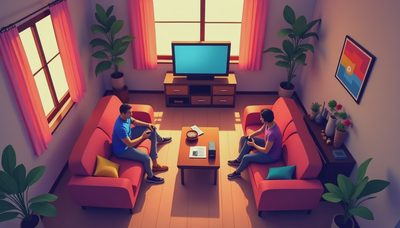
For local multiplayer, New Super Mario Bros. Wii and Rayman Legends are better choices than many technically more ambitious co op games. Their rules are simple, but the difficulty comes from coordination. Players will bump into one another, steal power-ups, and occasionally ruin a carefully planned jump. That chaos is not a flaw when everyone understands the evening is about laughing rather than setting a perfect time.
Where nostalgia starts lying to you
Not every classic deserves a full replay. Older co op games often hide their weaknesses behind memories of who you played with. A campaign that felt enormous during college can feel repetitive when you have two hours on Saturday night. Requiring every player to gather in the same room can also turn a favorite into a setup project involving old consoles, adapters, cables, and uncertain display compatibility.
The original Borderlands is a useful example. Its loot loop is still satisfying, and the four character classes give a group reasons to compare approaches. However, the inventory is clumsy, the story interruptions are frequent, and the early hours can feel like a slow march through similar desert fights. It is enjoyable with the right group, but I would not recommend it as the easiest first choice for a busy adult.
The same warning applies to games that depend on a now-quiet online community. A title can have excellent mechanics and still be a poor recommendation if finding opponents or teammates takes longer than playing. Before buying an older online game, check whether its current platform has active matchmaking, private-session support, or a reliable friend group. The box art cannot answer that question.
A practical way to choose your next session
Start with the people, not the genre. If one player dislikes precision platforming, do not force a difficult 2D challenge because it has a strong reputation. If someone only has ninety minutes, choose a chapter-based campaign instead of a progression-heavy RPG. The best co op games fit the available evening rather than demanding that the evening change around them.
Next, decide whether you want cooperation or competition disguised as cooperation. Mario Kart: Double Dash, Super Smash Bros. Melee, and similar party staples can create excellent group memories, but they are not the same experience as solving a puzzle or surviving a campaign together. Both formats have value. Confusing them is how a relaxed night becomes an argument over a scoreboard.
Then check the version. Xbox backward compatibility can make older console games painless to revisit, while PC editions sometimes need community patches, controller mapping, or a little patience. A remaster is not automatically better, either. Improved resolution helps, but changes to lighting, audio, split-screen support, or matchmaking can affect the original feel. Look for the version that removes the most friction without replacing the parts people liked.

The best picks for limited free time
For a two-hour session, I would reach for Left 4 Dead 2, Portal 2, Streets of Rage 4, or Teenage Mutant Ninja Turtles: Shredder's Revenge. Each offers a clear starting point and a natural stopping point. You can finish a satisfying slice without committing to a forty-hour campaign or remembering a complicated build system.
For a longer weekend, Halo 3, Gears 3, and the campaign in Army of Two can provide a stronger sense of progression. Army of Two is rougher than its reputation suggests, especially in shooting feel and repeated set pieces, but its emphasis on coordinated movement remains distinctive. It is a rental-length recommendation rather than a permanent installation for most players.
For families or mixed-skill groups, prioritize readable controls and generous recovery systems. New Super Mario Bros. Wii can be chaotic, but the ability to bubble after a mistake keeps one player from ending the entire attempt. Lego Star Wars: The Complete Saga uses simple combat and recognizable objectives to make participation easy. These games are not shallow; they are welcoming, which is a different and useful quality.
Are co op games still worth your time?
Yes, but not because every old favorite is secretly timeless. The strongest co op games still earn their place by creating useful roles, quick feedback, and stories that belong to the people playing. They make a short session feel complete rather than making you feel guilty for stopping.
My honest method is simple: choose one game, confirm the current version supports your group, and schedule a session before buying three alternatives. Give it an hour. If the controls fight you, the menus waste time, or nobody is talking except to ask how much longer remains, move on. Important does not always mean replayable.
If you have six hours this weekend, start with Portal 2 for thoughtful teamwork, Left 4 Dead 2 for fast shared panic, or Rayman Legends for cheerful disorder. Those are still worth loading, with the right expectations. The goal is not to prove that the past was better. It is to find co op games that make the present evening better.



No signals yet — transmit the first.