Classic arcade games have a difficult job in 2026. They need to compete with enormous open-world adventures, polished indie releases, and the convenience of playing almost anything through a subscription service. Nostalgia can get you to press Start, but it cannot guarantee that a game still feels good after twenty minutes. As someone fitting games around work, family, and the occasional interrupted weekend, I have become less interested in historical importance and more interested in whether an old favorite deserves my limited free time.
The good news is that the best arcade games remain unusually easy to recommend. They explain themselves quickly, create a clear challenge, and rarely demand a 40-hour commitment. The weaker ones reveal their age just as quickly through awkward controls, unfair difficulty, or repetition that memory quietly edited out.
What makes an arcade classic worth revisiting
The strongest classic arcade games still have immediate physical appeal. You move, shoot, steer, jump, or punch, and the response arrives without a tutorial window explaining the basic idea. Pac-Man remains readable because every turn matters. Galaga makes a single screen feel tense through enemy patterns and risk management. Street Fighter II still rewards learning spacing, timing, and a small set of moves instead of burying the action under systems.
That clarity matters more now than it did when I was a kid. Back then, spending an afternoon learning a difficult game was normal. Today, I might have forty-five minutes after dinner. A good arcade title can deliver a complete little session in that time. A weaker one asks for repeated quarters, memorized enemy behavior, or patience with design decisions that were understandable in 1988 but frustrating now.
Difficulty is not automatically a flaw. The question is whether failure teaches you something. In Tetris, a bad decision is visible and useful. In Donkey Kong, a missed jump often makes you want another attempt. When a game kills you because the screen was too busy to read or because a hitbox feels arbitrary, the old coin-operated business model becomes impossible to ignore.
The best starting points for busy adults
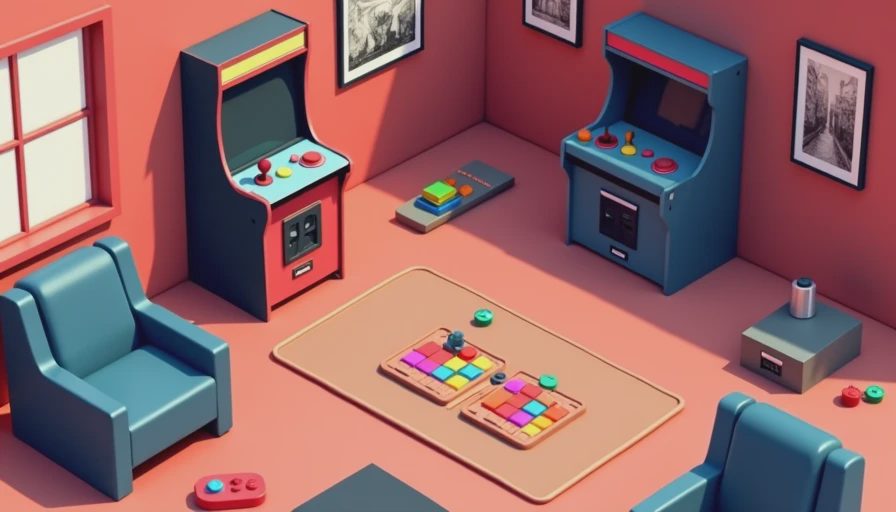
If you want a short list of classic arcade games that still feel inviting, start with titles built around compact feedback loops. Pac-Man Championship Edition DX is a modernized route into Pac-Man's ideas, while the original remains valuable if you want the slower maze rhythm. The arcade version of Ms. Pac-Man adds more personality and shifting mazes without losing the basic elegance.
For action, Metal Slug is a strong choice when you want cartoon violence, responsive movement, and stages that can be sampled in ten-minute bursts. It is demanding, but its animation and sound make every encounter legible. Contra is harsher, especially if you are playing alone, yet its running-and-gunning rhythm remains remarkably clean. If you prefer racing, Out Run offers a more relaxed kind of replayability: choose a route, enjoy the music, and accept that the point is style rather than simulation.
Puzzle fans have even better options. Tetris needs no introduction, but Puzzle Bobble, also known as Bust-A-Move, is an excellent two-player pick with rules that become clear almost instantly. These are games I can load late at night without remembering a control scheme, a character build, or a plot twist from three years ago.
Where nostalgia starts lying to you
Not every respected title deserves a full replay. Some classic arcade games were important because they established a genre, showed off new hardware, or dominated a particular moment. That does not mean they remain pleasant for a modern player. Early beat-em-ups often feel slow between encounters, and many rely on enemy patterns that are more tedious than challenging. Final Fight has satisfying hits and memorable characters, but playing alone can expose how much repetition sits beneath the famous presentation.
Light-gun games create another problem. Time Crisis and House of the Dead can still be entertaining when the setup works, but a standard controller is a poor substitute for the original arcade experience. The same applies to racing games designed around a steering wheel, flight games built around a full cabinet, and rhythm games that expected dedicated buttons or pads. The software may be historically fascinating while the home version feels like a compromise.
Even Pac-Man can become a better memory than a recommendation if you expect variety. Its appeal is precise, not broad. You are enjoying route planning, chase tension, and gradual mastery. If that loop does not click within a few sessions, a more elaborate modern version will not necessarily fix the problem.
Ports, collections, and emulation in 2026
The version you play can determine whether classic arcade games feel crisp or irritating. Official collections from publishers such as Capcom, Konami, Sega, and SNK often provide the easiest path because they include save states, screen filters, button mapping, and multiple regional versions. Those features do not change the underlying game, but they remove the friction of restarting from the beginning every time real life calls.
Save states deserve a practical defense. Using one before a difficult boss or a section you have already beaten is not cheating when your goal is to experience the game rather than recreate a 1991 arcade budget. I usually prefer a limited approach: save at the start of a stage, then play normally until I finish or lose interest. That keeps the tension without requiring twenty uninterrupted attempts.
Emulation can also be excellent when you own the software and use a legal setup, but configuration is part of the cost. Input lag, aspect-ratio settings, audio timing, and controller mapping can turn a responsive game into a muddy one. A reliable wired controller and a television's game mode often matter more than an expensive visual filter. If a publisher offers a well-reviewed collection for $15 to $30, that convenience may be worth more than hours spent adjusting scanlines.
A useful six-hour weekend test
When deciding among classic arcade games, I use a simple test rather than a ranking based on reputation. Give the game three sessions of about twenty minutes. In the first session, learn the basic movement and identify what the game wants from you. In the second, try one deliberate improvement, such as conserving lives, choosing a safer route, or learning a special move. In the third, ask whether failure made you curious or merely annoyed.
That test separates satisfying difficulty from empty punishment. It also protects a busy adult from buying a large retro collection and playing none of it. If a game feels promising but too severe, try its easier mode, practice feature, or a modern port with rewind. If the central action still feels flat after those adjustments, move on without guilt.
This approach works especially well with arcade shooters. R-Type rewards pattern knowledge but can feel rigid. Gradius gives you more weapon choices but punishes careless power-up decisions. Ikaruga is brilliant for players who enjoy deliberate color switching, yet it is not a casual pick. The point is not to force every acclaimed game into your routine; it is to find the one whose demands match your mood.
The honest recommendation
The most durable classic arcade games are not valuable only because they came first. They remain good because their rules are visible, their controls are direct, and their best moments arrive quickly. That is why Pac-Man, Tetris, Street Fighter II, Metal Slug, Out Run, and Puzzle Bobble continue to earn playtime long after their cabinets disappeared from ordinary shopping malls.
Other games are worth approaching as artifacts, short experiments, or memories you want to check. Important does not always mean replayable. Sometimes the right conclusion is that a title shaped gaming history but does not deserve another weekend. That is not disrespect; it is a useful distinction.
If you have six hours this weekend, choose one collection, set up a comfortable controller, and start with a game that communicates its idea in under a minute. The best classic arcade games do not need a lecture before they become fun. They simply ask for one coin, one attempt, and enough attention to show you why the design survived.



No signals yet — transmit the first.